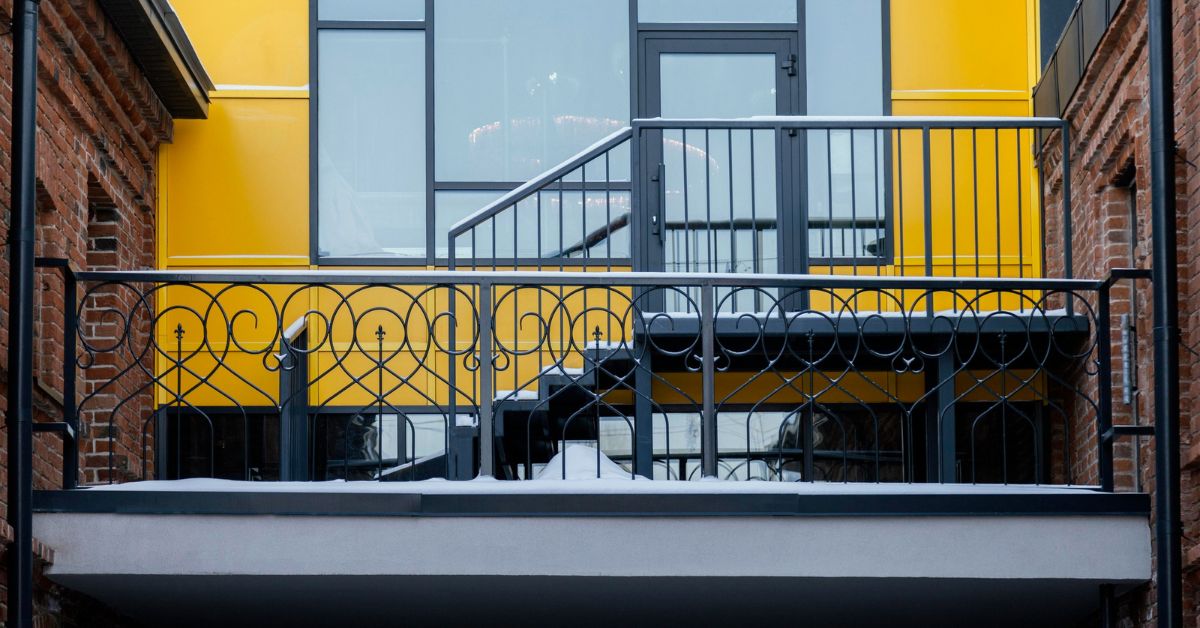
Introduction
Everyday protection with refined architectural detail. Neutral overview of benefits, styles, safety, materials/finishes, installation, and care.
Why choose wrought iron
-
Strength & longevity: Rigid members, welded joints handle use/wind.
-
Slim profiles: Preserve views, secure edges.
-
Timeless look: Fits historic, transitional, modern façades.
Design & style
-
Classical: Scrolls, collars, rings, spearheads, volutes.
-
Contemporary: Minimal pickets, flat bars, geometric patterns.
-
Custom: Monograms, medallions, planters, integrated lighting.
-
Top rails: Round/oval/flat; continuous grabs on stairs.
Safety & code
-
Guard height/spacing: To code; infill prevents climb-through.
-
Hand grasp/returns: Smooth transitions; closed returns reduce snags.
-
Loads/anchorage: Design for live/wind loads; rated anchors, sound substrates.
Materials & finishes
-
Substrate: Solid steel/wrought, sized to span/exposure.
-
Protection stack: Prep → (zinc/galvanize as needed) → primer → powder coat or industrial enamel.
-
Fasteners: Exterior-rated, coating-compatible.
Install (at a glance)
-
Field measure: spans, heights, substrates, clearances.
-
Shop fabrication: jigs; dressed/sealed welds.
-
Finish: clean, pretreat, coat; seal on-site cuts.
-
Set & secure: level, anchor, torque; protect finishes.
-
Final checks: height, spacing, smooth hand travel, coating continuity.
Care & longevity
-
Rinse seasonally; remove salts/debris.
-
Touch up chips promptly.
-
Inspect anchors/base plates/welds after storms; re-torque if needed.
-
Keep vegetation off finishes.
FAQs
-
Match existing architecture? Yes—profiles/ornament can be replicated.
-
Paint vs. powder coat? Powder coat is tougher; pair with galvanizing in harsh settings.
-
Child-safe without bulk? Yes—correct spacing/height and smooth returns provide safety with minimal visual weight.
https://bit.ly/3F5qn1p


No comments:
Post a Comment